


What to Check Before Taking Your Jeep Off the Road
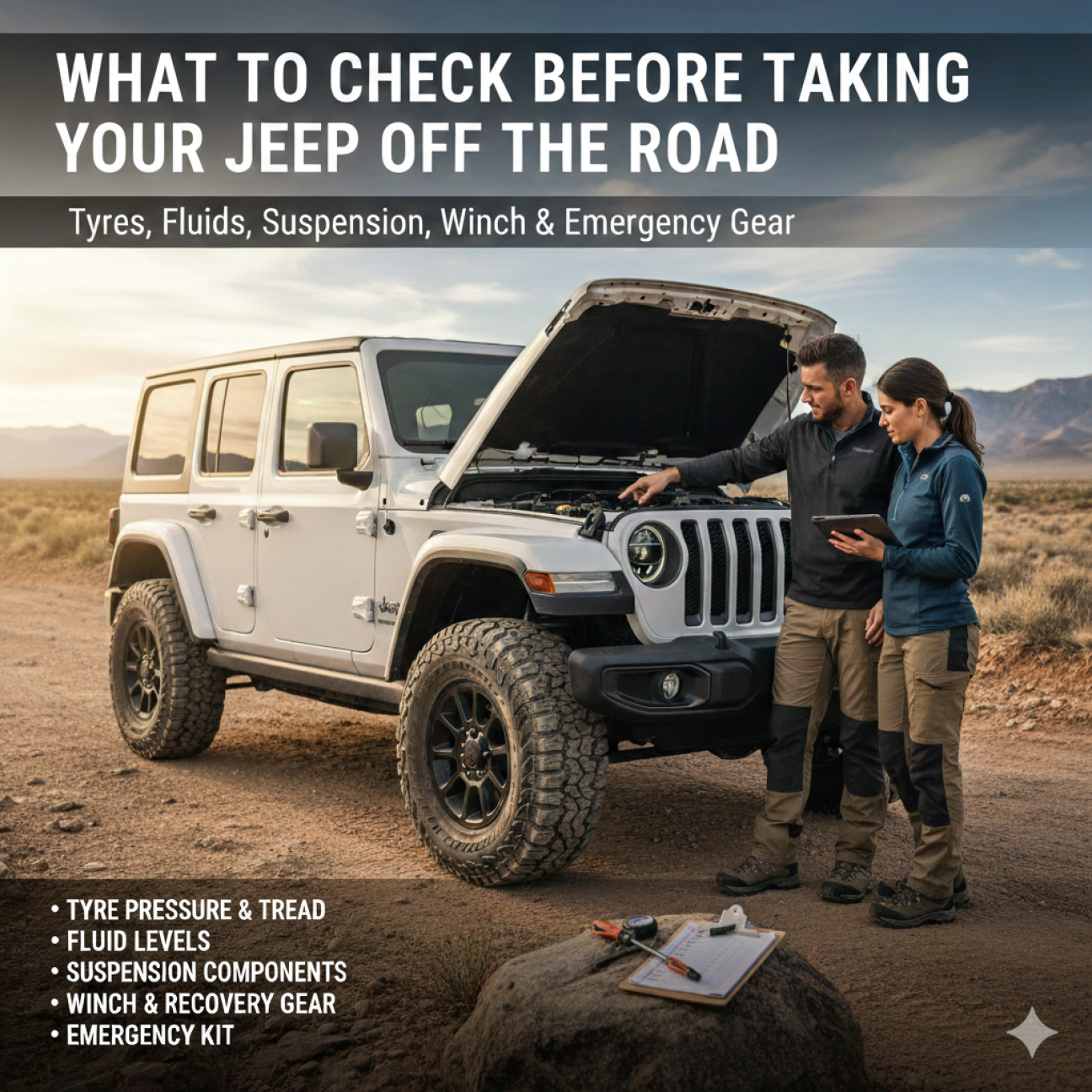
The United Arab Emirates offers some of the most spectacular landscapes for driving enthusiasts. From the rolling red dunes of Al Badayer to the rocky trails of the Northern Emirates, adventure awaits. However, leaving the pavement requires more than just courage and a full tank of fuel.
Venturing into the desert or mountains places immense stress on your vehicle. The conditions are vastly different from the smooth asphalt of Sheikh Zayed Road. Without proper planning, a fun weekend trip can quickly turn into a stressful situation.
Prioritizing jeep off road preparation is the single most important step for any driver. It ensures that your vehicle is mechanically capable of handling the terrain. It also guarantees the safety of you and your passengers.
A thorough inspection helps you catch small issues before they become major failures. It gives you the confidence to tackle challenging obstacles. This guide outlines the essential checks every Jeep owner should perform before hitting the trails.
Why Pre Off Road Inspection Is Essential
Many drivers assume that because they drive a rugged 4x4, it is always ready for action. This misconception is a leading cause of breakdown in the desert. A vehicle that drives perfectly in the city may have hidden weaknesses.
On the road, the stress on components is consistent and predictable. Off road, the forces are dynamic and often extreme. Suspension compresses fully, engines run at high RPMs, and cooling systems work overtime.
Skipping a pre-trip inspection is a gamble with your safety. Being stranded deep in the desert is a serious risk, especially in summer. Recovery from remote areas can be difficult and expensive.
How Off Road Terrain Pushes Vehicles Beyond Normal Limits
Driving in soft sand requires momentum and power. This keeps the engine under high load at low speeds. There is less airflow through the radiator, leading to rapid heat buildup.
Climbing rocky inclines puts massive torque on the drivetrain. Axles, differentials, and driveshafts are twisted with immense force. If these parts are worn, they will likely fail under this pressure.
The vibration from washboard tracks loosens bolts and rattles electrical connections. Every part of the Jeep is shaken and stirred. Only a tight, well-maintained vehicle can withstand this abuse repeatedly.
Common Problems Caused by Poor Preparation
Overheating is the most frequent issue seen in the UAE desert. It is often caused by low coolant or a dirty radiator. This can lead to engine damage that costs thousands to repair.
Tyre failures are also common and often preventable. A tyre with a weak sidewall or low tread will struggle in the sand. This leads to getting stuck or suffering a blowout.
Suspension failures, such as broken shock mounts, can leave a vehicle immobilized. These parts usually show signs of wear long before they break. A simple check would have identified the risk.
Tyres and Traction Checks Before Leaving the Road
Your tyres are the only connection between your Jeep and the ground. In off road situations, this connection is the difference between moving and digging a hole. Traction is everything when navigating loose sand or slippery rocks.
Before you leave the tarmac, a detailed inspection of your rubber is vital. You need to ensure they are up to the task. This involves checking the physical condition and the air pressure.
Never underestimate the importance of your spare tyre. It must be in the same condition as your road wheels. If you get a flat in the dunes, a good spare is your ticket home.
Tyre Condition and Pressure for Desert and Trail Driving
Inspect the sidewalls of your tyres for any cuts or bulges. The harsh sun in the UAE can cause dry rot, which weakens the rubber. Cracks in the sidewall are a major safety hazard when deflating tyres.
Check the tread depth across the entire width of the tyre. While slicks might work on a race track, you need biting edges for off roading. Uneven wear can also indicate suspension issues that need addressing.
When selecting equipment for the season, many owners review specific jeep wrangler tyres to ensure they have the right tread pattern for shifting sands. Choosing a tyre that balances on-road comfort with off-road durability is key. A good all-terrain tyre is often the best choice for mixed UAE driving.
Why Incorrect Tyres Reduce Control and Increase Risk
Using a highway terrain tyre in soft sand is possible but difficult. They lack the flexible sidewall needed to create a wide footprint when deflated. This causes the tyre to dig in rather than float on top.
Mud terrain tyres look aggressive but can be heavy. This adds unsprung weight which strains the suspension. They can also dig too aggressively in sand if the driver is not careful.
Driving with damaged tyres increases the risk of a de-bead. This is when the tyre pops off the rim at low pressure. It is a difficult problem to fix in the middle of a dune.
Suspension and Undercarriage Inspection
The suspension system takes a beating every time you go off road. It absorbs the impact of drops, bumps, and rocks. It also keeps the wheels planted on the ground for traction.
A compromised suspension system makes the vehicle unpredictable. It can lead to a rollover in extreme situations. Before heading out, you must get under the Jeep and look.
You are looking for anything that looks loose, bent, or leaking. Shake the components to check for play. If it rattles in the driveway, it will break on the trail.
Key Suspension Components to Inspect
Check the shock absorbers for signs of oil leaking. A leaking shock has lost its ability to dampen movement. This leads to a bouncy ride and poor handling.
Inspect the control arm bushings for cracks or missing chunks of rubber. These bushings locate the axles under the vehicle. Worn bushings lead to "death wobble" and vague steering.
Look at the coil springs to ensure they are not broken or sagging. A sagging spring reduces ground clearance. This makes it more likely you will hit obstacles with the underbody.
Protecting the Undercarriage From Trail Damage
The underside of your Jeep houses vital components like the oil pan and transmission. These are vulnerable to impact from rocks and hard dunes. Skid plates are essential for protection.
Check that your factory skid plates are secure and not rusted through. If you plan on serious rock crawling, consider aftermarket protection. It is cheaper to replace a skid plate than a transmission.
Know your vehicle's lowest point. This is usually the differential housing. Being aware of your clearance helps you pick the right line through obstacles.
Fluids, Cooling, and Engine Readiness
The engine is the heart of your Jeep, and fluids are its lifeblood. Off road driving generates immense heat that must be managed. If the fluids are old or low, the engine cannot protect itself.
Before every trip, pop the hood and check all levels. It takes five minutes and saves huge headaches. Look for the colour and smell of the fluids as well.
Ensure your air filter is clean. Sand dust is incredibly fine and can bypass dirty filters. A clean engine is an efficient and reliable engine.
Fluid Levels That Must Be Checked Before Off Roading
Engine oil lubricates and cools the internal parts. Ensure it is at the full mark and not black and sludgy. Low oil on a steep incline can starve the oil pump.
Coolant prevents the engine from boiling over. Check the level in the reservoir and the radiator when cold. Never open a hot radiator cap.
Brake fluid should be clear and near the maximum line. Dark fluid indicates moisture contamination which lowers the boiling point. This can lead to brake fade on steep descents.
Why Cooling Systems Matter in UAE Heat
The combination of high ambient temperature and high engine load is brutal. The cooling system must be in top condition. Even a small weakness will result in overheating.
Check the radiator hoses for soft spots or bulges. Squeeze them to ensure they are firm. Inspect the serpentine belt for cracks or fraying.
Ensure the radiator fins are not clogged with mud or dried grass. Air needs to flow freely through the core. If the fan clutch is weak, the fan won't pull enough air at low speeds.
Drivetrain and Braking System Checks
The drivetrain transfers power from the engine to the wheels. This includes the transmission, transfer case, driveshafts, and axles. These parts endure high torque loads in the sand.
Any clunking or grinding noises should be investigated immediately. Smooth power delivery is essential for maintaining momentum. A jerky drivetrain breaks traction and gets you stuck.
Brakes are just as important off road as on road. You need precise control when descending steep dunes. You also need to hold the vehicle stationary on inclines.
Inspecting the 4x4 System and Differentials
Test your 4-High and 4-Low engagement on a loose surface before the trip. It should engage smoothly without grinding. If it struggles, you may have a linkage issue.
Look for oil leaks around the differential covers and pinion seals. A dry differential will overheat and seize gears. Check the breather tubes to ensure they are not blocked or disconnected.
Inspect the U-joints on the driveshafts. Grab the shaft and try to rotate it. Any play in the U-joint indicates it is about to fail.
Brake Performance on Uneven Surfaces
Sand and mud can get trapped in the brake calipers. This causes rapid wear of the pads and rotors. Inspect the pad thickness before you leave.
Ensure the parking brake is properly adjusted. You rely on it when stopped on hills. It acts as a safety backup if the main brakes fail.
Check the brake lines for any signs of rubbing or damage. Suspension movement can sometimes pinch a line if not routed correctly. Flexible extended lines are good for lifted Jeeps.
Safety Equipment and Emergency Preparedness
Preparation goes beyond the mechanical condition of the Jeep. You must be prepared for the unexpected. Even the best-maintained vehicles can get stuck or break down.
Carrying the right gear turns a disaster into a minor inconvenience. It allows you to self-recover or help others in your group. It is part of the code of responsible off roading.
This gear should be easily accessible, not buried under camping equipment. Everyone in the vehicle should know where it is. Safety is a shared responsibility.
Essential Recovery and Safety Gear to Carry
A rated tow strap and D-shackles are mandatory. Never use a strap with metal hooks as they become projectiles if they break. A kinetic rope is even better for sand recoveries.
A high-quality air compressor and tyre gauge are essential. You need to air down for traction and air up for the drive home. Driving on pavement with low pressure is dangerous.
Carry a shovel and a base plate for your jack. A standard jack will sink into the sand. Basic tools like wrenches, pliers, and screwdrivers can fix loose parts.
Planning for Emergencies in Remote Areas
Always travel in a group of at least two vehicles. If one breaks down, the other can go for help. Solo off roading is extremely risky in the UAE summer.
Share your trip plan with someone who is staying behind. Tell them where you are going and when you will be back. Stick to the plan so they know where to search.
Carry plenty of extra water and a first aid kit. Dehydration happens fast in the desert. A fully charged phone and a GPS device are critical for navigation.
FAQ Section
Do I need to prepare differently for desert driving in UAE?
Yes, heat and sand require specific checks and adjustments.
Is tyre pressure adjustment necessary for off road driving?
Yes, correct pressure improves traction and control.
Can new Jeeps go off road without inspection?
No, even new vehicles need proper checks.
Is off road driving risky without recovery gear?
Yes, recovery equipment is essential for safety.
Conclusion
Off roading in the UAE is a thrilling pastime that connects you with nature. However, it demands respect for the environment and the machine. Jeep off road preparation is the key to unlocking this experience safely.
By taking the time to inspect your vehicle, you minimize the risks. You ensure that your Jeep is ready to perform when you need it most. It transforms anxiety into confidence.
Don't let a preventable mechanical issue ruin your weekend. Build a checklist and stick to it before every trip. With the right preparation, the desert is your playground.
